



If you’re ready to finish the year strong, this blog is your roadmap. We’ll walk through the top fitness goals for 2025 and explain how the QuickShift Pro adjustable dumbbell system can play a starring role. Whether you’re working out at home or in the gym, you’ll learn how to set fitness goals, pick achievable fitness goals, and tackle a year-end workout challenge that leaves you feeling accomplished.
Key Takeaways
- Equip yourself with versatile gear (like QuickShift Pro) that allows you to set and hit workout goals before 2025 ends.
- Define ten specific goals that address strength, endurance, flexibility, cardio and consistency.
- Combine gym training tips and smart planning with the flexibility of home workouts.
- Stick to actionable, measurable milestones using achievable fitness goals so you don’t get overwhelmed.
- Remember: motivating yourself through the final months of the year is entirely possible with the right mindset and tracking.
Goal 1: Build Foundational Strength
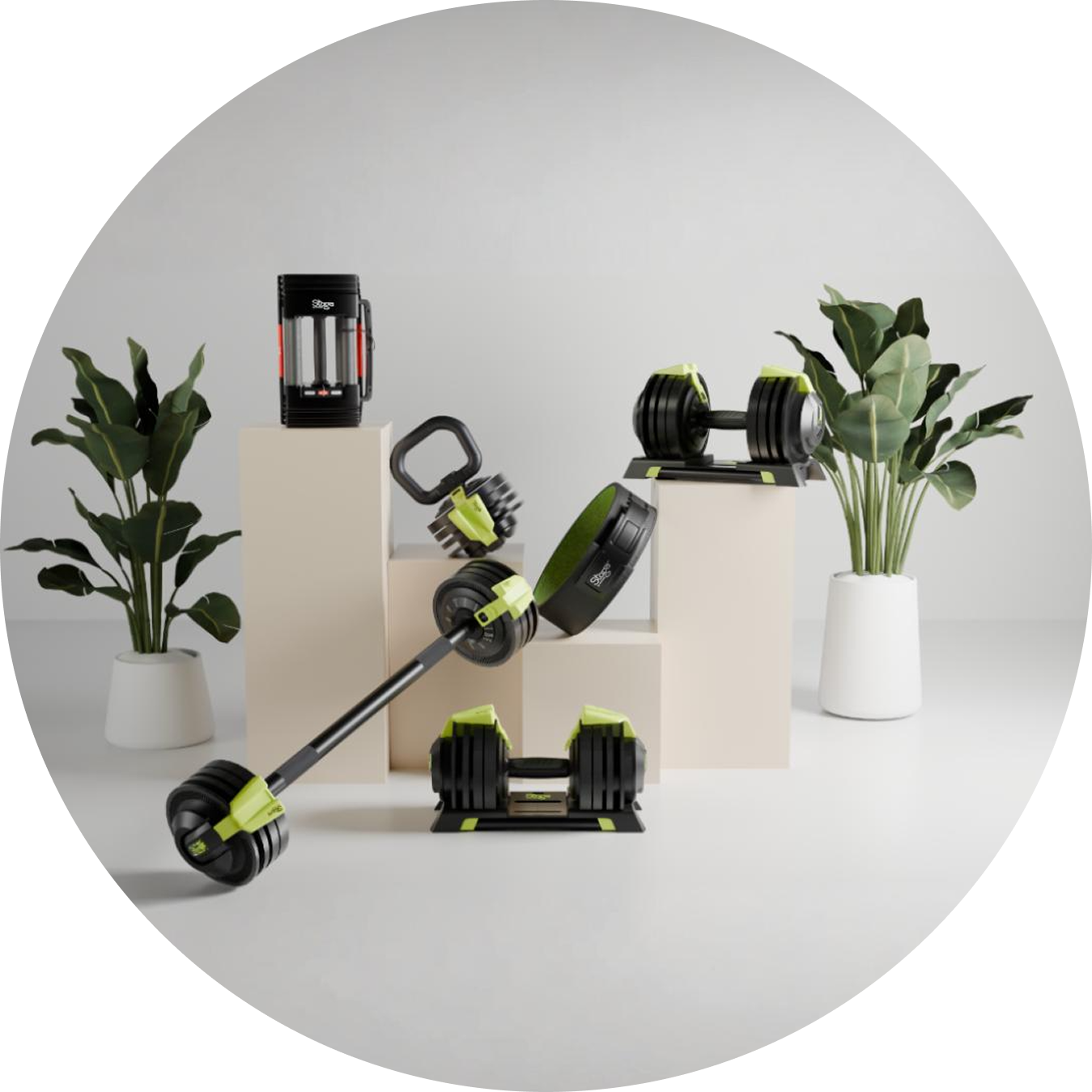
If you don’t already have a base, building foundational strength is essential. With the QuickShift Pro system, which allows you to adjust from around 2 kg up to 24 kg across 36 incremental steps, you can steadily progress as you get stronger.
How to set this goal:
- Choose a baseline movement (for example, goblet squat or dumbbell bench press).
- Track your current weight and aim to increase by 10–20 % every 4–6 weeks (where safe).
- Include a small check-in each month to record how many reps or how much weight you lifted.
Why this matters: Strong muscles support better posture, reduce injury risk and boost metabolism. Indeed, a study shows that people who engage in regular strength training have significantly lower mortality risk and improved cardiovascular health.
Goal 2: Improve Muscular Endurance
Once you have strength building in place, the next layer is endurance: being able to perform more reps or longer sets. The QuickShift Pro’s dial system lets you quickly adjust weights, meaning less downtime between exercises and more focus on higher-rep sets.
Actionable plan:
- Choose 2–3 exercises (e.g., lunges, rows, overhead press) and aim for 15-20 reps with moderate weight.
- Set yourself a target: perhaps 3 sets of 20 reps by December.
- Use the dial adjustment to drop weight easily if fatigue sets in, letting you keep going rather than stopping.
This helps build strength and endurance goals together: your muscles will not only lift more but also sustain longer.
Goal 3: Boost Cardiovascular & Flexibility Training
Strength alone isn’t enough. Modern studies emphasise that combining cardio and strength has greater cardiovascular benefits than either alone.
Goal details:
- Schedule 2 cardio sessions per week (e.g., brisk walk, cycling, jump rope).
- Add 1 flexibility/mobility session (e.g., yoga, dynamic stretching, foam-rolling).
- Set a target: by ethe nd of December, you’ll comfortably sustain 30 minutes of moderate cardio and 20 minutes of mobility without feeling wiped out.
How QuickShift Pro helps: After your cardio, you can drop into a quick dumbbell circuit (light weight, 10-15 reps) to finish strong. This blends cardio and strength nicely and suits gym training tips for effective workouts.
Goal 4: Create a Consistent Routine
One of the most overlooked goals is just showing up. No matter how great your gear is or how ambitious your plan, consistency separates those who make progress from those who don’t.
Plan
- Decide on 3 “non-negotiable” workout days each week (e.g., Monday, Wednesday, Saturday).
- Use the QuickShift Pro at each session: workloads may vary, but the presence is constant.
- Track your attendance: aim for at least 90 % adherence for the rest of the year.
With achievable fitness goals, you’ll feel you’re making progress each week, which reinforces motivation. A routine is the foundation for success.
Goal 5: Increase Power & Explosiveness
Beyond strength and endurance lies power—moving explosively, training fast-twitch muscle fibres and enhancing performance. This goal leads naturally from endurance.
Strategy
- Incorporate 1 power session every 2 weeks: think dumbbell clean-press, kettlebell swing variation (QuickShift Pro converts into kettlebell mode) or jump squats.
- Set an objective: by December, perform 8 clean-presses at X kg (say 70 % of your 1-rep max) with good form, or execute 10 kettlebell swings at efficient speed.
- Measure improvements in time or reps.
This helps athletes, busy professionals or anyone wanting to train functional performance, not just muscle size.
Goal 6: Achieve a Leaner Physique
Many year-end workout goals revolve around body composition. Combined strength, endurance and cardio training support this. Studies show that weight training helps reduce body fat and improve metabolic health.
Plan
- Monitor body-fat percentage or at least the waist/hips ratio monthly.
- Pair your training with a modest calorie-controlled diet (consult a nutritionist if needed).
- Use QuickShift Pro for circuit-style workouts (lighter weights, higher reps, minimal rest) to raise heart rate and support fat-burning.
By the end of 2025, you want to see measurable improvement—leaner, stronger and more defined.
Goal 7: Master Mobility & Flexibility
Strength and cardio are often prioritised, but flexibility and mobility are too frequently neglected. This has knock-on effects: better flexibility means better range of motion, reduced injury risk and improved workout quality.
How to act:
- Once per week, spend 20–30 minutes on mobility: hips, shoulders, thoracic spine, hamstrings.
- Use body-weight and light-weight tools: QuickShift Pro in its lightest setting (2–4 kg) can be used for mobility drills like landmine rows or controlled press outs.
- Measure your progress: can you reach further in a hamstring stretch, or maintain a deeper squat with no discomfort?
This is a great complement to your strength and endurance work, reinforcing the holistic approach.
Goal 8: Develop a Balanced Upper and Lower Body
Too often, people favour one region (upper body) and neglect the other (legs/core). A balanced physique not only looks better but also functions better.
Actionable steps:
- Split your workouts into upper body day, lower body day, and full-body day.
- On lower-body days, use QuickShift Pro in kettlebell/barbell mode for goblet squats, deadlifts or lunges.
- On upper-body days, focus on presses, rows, and shoulder work.
- By December, aim for parity: your lower-body strength (say 3×8 goblet squats) is within 80 % of your upper-body strength (3×8 bench press equivalent using dumbbells).
Balanced training helps reduce muscle imbalances, lessens injury risk and supports better posture.
Goal 9: Prepare for a Year-End Workout Challenge
Why not set yourself a mini-challenge to mark the end of 2025? This goal builds excitement and motivation.
Challenge idea:
- Choose one “big session” in December: e.g., complete 100 reps of dumbbell work (split across 4–5 movements) in under 25 minutes. Use QuickShift Pro for smooth transitions between weights and positions.
- Announce your challenge (to a friend, social or journal) and treat it like an event you must show up to.
- Record your time and performance, then celebrate your progress compared to your starting point.
Having this marker gives your training extra purpose in the final weeks of the year, consolidating all previous goals
Goal 10: Build Long-Term Fitness Motivation for 2025 and Beyond
Finally, let’s not treat fitness goals as a one-off list. True success lies in building habits and motivation that carry into the next year.
Steps
- Keep a workout journal or digital log of your sessions, weights used, and how you felt.
- Identify three motivational triggers: maybe a playlist you’ll use, a workout buddy, or a reward system for hitting milestones.
- Recognise that the QuickShift Pro’s design – with a quick-change dial between 2 kg and 24 kg and three modes (dumbbell, kettlebell, barbell)- supports variety and keeps boredom at bay.
- Plan a transition into 2026: set a new broad goal now (e.g., “lift X kg by June”, “run 5 km under 25 minutes by March”) and use your December rhythm to carry that forward.
Motivation is more than a burst of effort; it’s the steady building of belief, tracking and progression.
Conclusion
Wrap up your fitness goals 2025 journey by recognising that mastering fitness before year-end is entirely possible—and the right tools and mindset make a world of difference. By focusing on the ten goals above, you’ll cover strength, endurance, cardio, flexibility, consistency, motivation and the fun of a year-end challenge. And with the QuickShift Pro at your disposal, you’ll have one piece of home workout gear that supports so many of these objectives in one place. Set the benchmarks, track your progress, stick with your routine, and you’ll head into 2026 with momentum, not just resolutions.
FAQs
Q1: How do I choose realistic, achievable fitness goals for the rest of 2025?
A: Start with a baseline (current strength, endurance, mobility). Then pick incremental increases you can reasonably hit (for example, 5-10 % gains every 4–6 weeks). Use a log and review monthly to adjust.
Q2: If I only have 30 minutes three times a week, will this plan still work?
A: Absolutely. The key is consistency and efficiency. Use compound movements (e.g., with QuickShift Pro) and combine strength with short cardio bursts. Even 30 minutes can drive meaningful progress if focused.
Q3: Can I mix home workouts with gym sessions and still rely on QuickShift Pro?
A: Yes. The flexibility of the gear means you can have one home-based session using QuickShift Pro and one gym session using machines or barbells. The routine is about movement consistency, not location.
Q4: What if I reach a plateau before 2025 ends?
A: Plateauing is normal. You can break through by varying exercises (switch the mode on QuickShift Pro: dumbbell → barbell → kettlebell), changing rep ranges, rest intervals or introducing a mobility-focused week. Also, review your nutrition and recovery.


