







“Ballistic training was taboo back in the 1990s. Yet again, it has gained massive popularity, especially with home workouts. Such is the pursuit of fitness. Every generation rediscovers a forgotten tool that helps people move better and feel stronger.”
Fitness centers pushed static stretching and dynamic stretching as preventive measures to avoid injury. If you’ve spent any time in the fitness space, you’ve probably heard some strong opinions about ballistic stretching or ballistic training. In the past few decades, we’ve been told to hold a stretch, breathe through the tension, and keep things static.
Lo and behold, Millennials and Gen Z fitness enthusiasts are once again seeking better ways to boost biomechanics. And ballistic movements, like kettlebell exercises, help you to achieve the following goals:
- level up your explosive power
- increase your range of motion
- Increase your stretch tolerance
- tendon stiffness reduction
- run faster and lift heavier
Dive into what is ballistic movement and how you can safely integrate these stretching exercises into your home workout routine. Static holds might not be cutting it anymore. Give this page a 5-minute scroll to know how you can reap the benefits of these stretches that literally give you strength and a toned physique.
Ballistic Stretching and Biomechanics
Did you know that ballistic stretching once used to be considered a taboo practice in the local gyms back in the 1980s and 1990s? It sure looks like an offbeat way to work out. Not to mention, the risk of disasters due to bad grip was high.
But this high-energy, momentum-based method has made a major comeback. Yet again, it has gained massive popularity, especially with home workouts. Such is the pursuit of fitness. Every generation rediscovers a forgotten tool that helps people move better and feel stronger.
When performed correctly with supportive fitness gear, it taps into your body's natural biomechanics.
Biomechanics that take you to next-level athletic performance.
What is ballistic stretching?
Ballistic stretching is an advanced technique to train your muscles. Ballistic stretching involves repetitive bouncing or jerking movements to stretch your muscles a certain way. For instance, kettlebell swing exercises. Ballistic stretching uses momentum. As you rapidly stretch the muscle, it triggers the body's natural stretch reflex, which quickly contracts the muscle.
Ballistic movements help you train for strength, stability, and fat loss. But it is important to train the right way with purpose, knowledge, and smart gear. Take a look at the requirements for practicing these stretches.
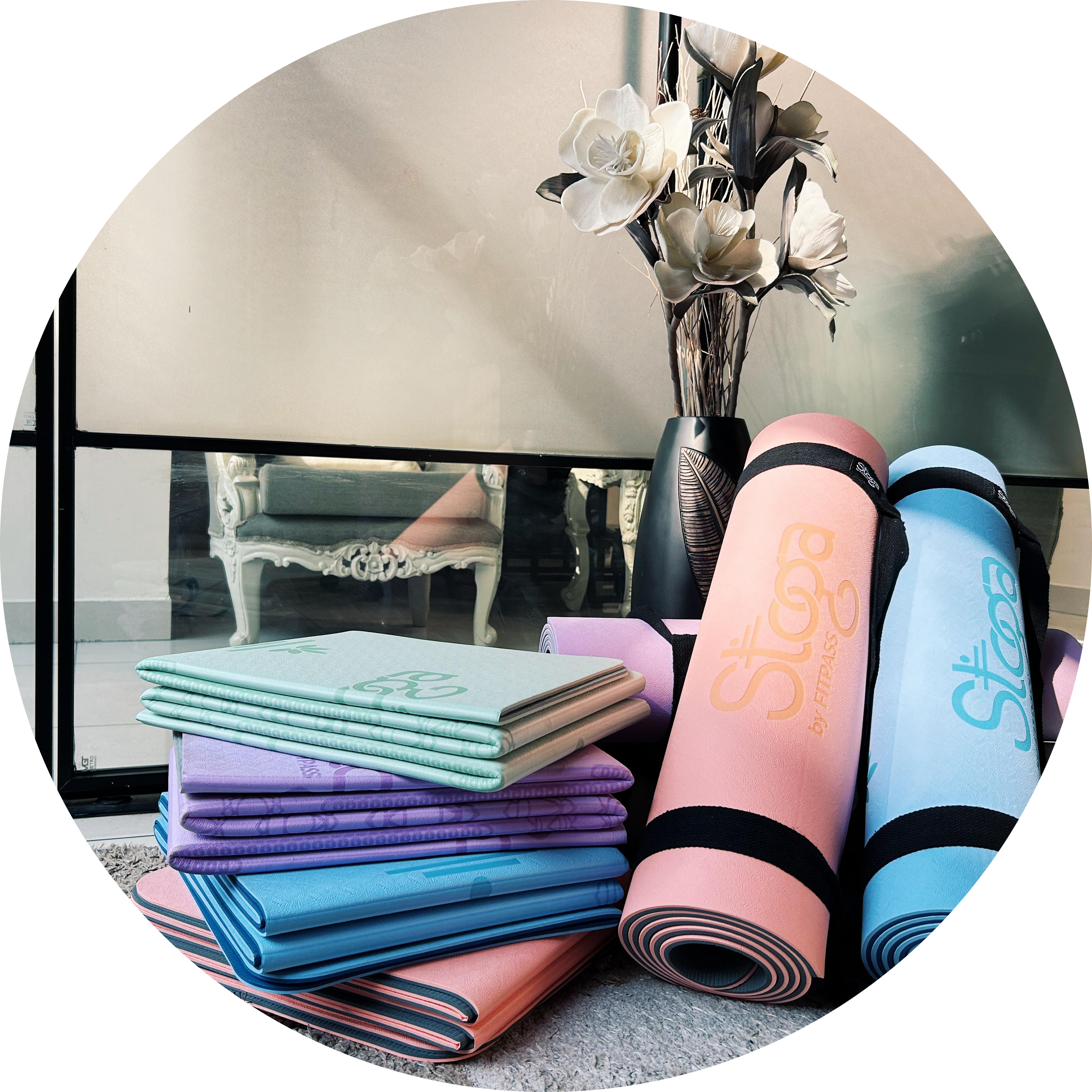
- Do: Place a high-quality yoga mat for grounding, stability, and good grip.
- Don’t: Do not do this with cold muscles. The reason is the high risk of muscle strain. Well, this is the reason why ballistic workouts were considered unsafe in the first place!
Here’s a highly appreciated stretch reflex mechanism blog sharing how this helps to train your muscles at home.
Who Benefits Most from Ballistic Stretching?
Because of its high-intensity nature, ballistic stretching isn't for everyone. If you are recovering from an injury, are relatively new to fitness, or suffer from joint instability, you are better off sticking to dynamic and static stretching. However, if you are a fitness enthusiast who exercises regularly, an athlete, or someone engaged in powerlifting, martial arts, or plyometric workouts, then this is a good routine for you. Take a look at who benefits the most from ballistic stretching exercises.
|
Fitness Goal |
Benefit Level |
|
Fat Loss |
★★★★★ |
|
Athletic Performance |
★★★★★ |
|
Functional Strength |
★★★★★ |
|
Core Stability |
★★★★☆ |
|
Endurance |
★★★★☆ |
|
Mobility Training |
★★★☆☆ |
Ballistic training and stretching can be the missing link to breaking through your performance plateaus. It teaches your body to produce power at the absolute end-range of your joint movement, making you a more resilient, robust athlete.
How to do Ballistic Stretching at Home?
Focus on the posture and invest in supportive gear. These are the most important elements to pull off ballistic stretching moves safely. No friction to the joints. No muscle tears. Here is some important gear that you will need to practice ballistic stretching sessions safely at home.
- yoga mat built for balance and grounding
- kettlebell for weighted ballistic movements
- non-slip fabric resistance bands
Static, Dynamic, and Ballistic: What’s the Difference?
First of all, not all stretches give similar results. Static stretching was pushed as a better alternative to ballistic movements. Here is a comparison of both.
|
Factor |
Ballistic Stretching |
Static Stretching |
|
Movement |
Continuous bouncing |
Hold position |
|
Duration |
Short bursts |
15-60 seconds |
|
Sport Specificity |
High |
Moderate |
|
Flexibility Gains |
Fast improvements |
Long-term improvements |
|
Warm-Up Use |
Excellent |
Less preferred before explosive sports |
|
Injury Risk |
Higher if performed incorrectly |
Lower |
At first glance, you can see that both benefit differently.
To understand what is ballistic stretching and how it is different from other movements, we need to stack it up against its cousins: static stretching and dynamic stretching. Static stretching is passive. Ballistic stretching is highly active and directly mimics the fast-paced, explosive movements we use in plyometrics, sprinting, and ballistic training.
Let’s clear up some terminology.
- Static Stretching: This is the traditional "stretch and hold" method. Think of holding a hamstring stretch for 30 seconds. It’s great for winding down after a workout, but research shows it can actually temporarily decrease explosive power if done right before a heavy lift.
- Dynamic Stretching: This involves controlled, fluid movements through a full range of motion without any bouncing. Think of arm circles or walking lunges. It’s a staple of modern pre-workout warm-ups.
- Ballistic Stretching: This method uses rapid, bouncing movements to force a joint beyond its normal range of motion. Instead of stopping at the end of your stretch, you use momentum to bounce and push further gently. New to this training style? Check out this 20-Minute Beginner Kettlebell Exercise.
The Science of Biomechanics: How Bouncing Boosts Performance
We have to look at biomechanics to understand why ballistic stretching works. It’s the study of how our muscles, bones, and tendons interact to produce movement. When you perform a ballistic movement, you aren't just stretching muscle fibers; you are training your central nervous system and elastic connective tissues. Here is what happens under the hood:
Overriding the Stretch Reflex (With Caution)
Your body has a built-in safety mechanism called the stretch reflex (or myotatic reflex). Controlled by tiny sensory receptors called muscle spindles, this reflex tells your muscle to contract when it senses a sudden, rapid stretch. It’s your body's way of preventing a tear.
With static stretching, you slowly bypass this reflex.
With ballistic stretching, you actually target and train the stretch reflex. By repeatedly exposing your muscles to fast, bouncing movements, you condition your nervous system to tolerate sudden changes in muscle length. Over time, this increases your active range of motion during high-speed movements.
Upgrading Your Tendon Elasticity
Think of your tendons as springboards, okay? So when you run, jump, or squat, your tendons store elastic energy and release it to propel you forward. Ballistic stretching exercises train your tendons to store and release this energy efficiently. Thus, improving your overall movement patterns. Training makes it more economical, allowing you to jump higher and sprint faster with less effort.
Real-World Biomechanical Specificity
Let’s be real: your body rarely moves statically in real life. Whether you’re chasing a soccer ball, hitting a personal record on your cleans, or dodging furniture during a home HIIT session, your muscles must perform at speed. Ballistic stretching acts as a functional range of motion exercise because it prepares your joints for the high-velocity forces they will actually encounter during your workout.
Classic Ballistic Stretching Exercises to Try
Ready to add some bounce with ballistic exercise to your routine? Here are three classic examples of how to safely transition traditional stretches into ballistic movements.
The Ballistic Toe Touches
Instead of bending over and holding your toes, you bend forward at the hips and use a light, rhythmic bouncing motion to pulse your torso downward. With each pulse, your hands reach slightly closer to the floor (or slightly past your toes) before gently rebounding back up. This primes the hamstrings and lower back for explosive hip hinges.
The Ballistic Butterfly Stretch
For the classic butterfly stretch, you sit with the soles of your feet together and pull them toward your groin. Instead of pressing your knees down with your elbows, you use your hip muscles to bounce your knees up and down like butterfly wings. This opens up the adductors and hips, preparing you for deep squats or lateral movements.
The Ballistic Kettlebell Exercise
The most famous kettlebell exercise is the kettlebell swing. It is a full-body exercise. The muscles that work the hardest during ballistic kettlebell swings are your glutes, hamstrings, core, and lower back. Moreover, your shoulders, quadriceps, forearms, and grip are moderately engaged. You hinge at the hips, generate power from the glutes, and thrust the kettlebell upward.
Its impact? Check out the following table.
|
Benefit |
Impact of Ballistic Kettlebell Exercise |
|
Builds Explosive Power |
Improves athletic performance |
|
Strengthens Posterior Chain |
Supports better posture |
|
Boosts Cardiovascular Fitness |
Raises heart rate quickly |
|
Burns Calories Efficiently |
Combines strength and cardio |
|
Improves Core Stability |
Supports spinal health |
|
Enhances Grip Strength |
Improves lifting performance |
The Golden Rules of Safe Ballistic Training
Because ballistic stretching pushes your joints past their comfortable limits using momentum, it carries a higher risk of injury if executed poorly. At Stoga, we are all about maximizing performance without sacrificing safety. To keep your biomechanics happy and injury-free, follow these essential safety guidelines:
- Never Stretch Cold: This is non-negotiable. Attempting ballistic movements on cold, stiff muscles is a fast track to a strain. Always perform 5 to 10 minutes of light cardio (like jogging, jumping jacks, or dynamic arm swings) to get blood flowing before you start bouncing.
- Keep It Rhythmic, Not Violent: The bounce should be a controlled, rhythmic pulse, not a spastic, jerking motion. You should always feel in control of the momentum.
- Use Proper Grounding and Support Gear: To perform these exercises safely, your body needs a stable base. Slipping on a hardwood floor while doing ballistic leg swings is a recipe for disaster. Perform your stretches on a high-grip, ergonomic fitness mat that supports your joints and prevents slipping.
- Listen to Your Body: There is a difference between a deep, intense stretch and sharp pain. If you feel pinching, pulling, or sharp discomfort, back off immediately.
Level Up Your Range of Movement with Stoga
Improving your biomechanics is about smart training, consistency, and having the right tools in your corner. You can push your body to its limits with advanced training techniques like ballistic stretching. Prioritize equipment that ensures both your safety and your performance.
Ready to unlock your full range of motion?
We’ve got your back, from supporting your ballistic ultra-grip mats that cushion your joints during explosive movements to supportive gear that aids your recovery.
At Stoga, we design functional, ergonomic home workout gear engineered to keep you grounded, stable, and protected. Discover our range of premium, biomechanically-friendly workout gear today and transform the way you move.


