





In today’s compact living spaces and ever-on-the-go lifestyles, the demand for smart fitness gear has never been greater. Enter the world of the origami yoga mat, the foldable, space-saving yoga mat that ticks all boxes for the modern yogi. Whether you’re practising in a small flat, packing for travel, or simply seeking a clutter-free workout solution, this type of mat offers a versatile answer.
In this article, we explore why the foldable yoga mat, compact yoga mat, space-saving yoga mat, and travel yoga mat are becoming essential pieces of yoga gear for home workouts, studios, and beyond. We’ll delve into materials (including dual-layer TPE yoga mats), eco-friendly options, how to choose the best yoga mat for small spaces, and highlight one standout model from Stoga, the Origami Foldable Yoga Mat.
Key Takeaways
- A foldable yoga mat saves space without compromising cushioning or grip.
- Dual-layer TPE mats are a strong choice for eco-conscious yogis and provide stability and joint protection.
- For small spaces, home workouts and travel, prioritise lightweight, easy-store options.
- The Stoga Origami Foldable Yoga Mat offers portability, non-slip grip, eco-friendly construction and versatility (also compatible with Pilates and stretching).
- Care and correct storage of your mat ensures longevity and hygiene.
Why a Space-Saving Yoga Mat Matters
Let’s start by understanding why a space-saving yoga mat is more relevant now than ever.
The Small Space Challenge
Many urban dwellers, especially in cities like London, Mumbai, Bengaluru or elsewhere, live in flats with limited floor space. A bulky rolled-up mat can become a trip hazard, a visual annoyance, or simply not get used because storing it is a pain. A “yoga mat for small spaces” thus becomes a practical necessity.
Moreover, home workouts increasingly compete with living rooms, dining areas and shared spaces. Fitness gear that tucks away neatly is far more likely to be adopted and used regularly.
Travel & On-the-Go Lifestyle
Whether you’re attending a yoga retreat, business trip or holiday, there’s real benefit in a “travel yoga mat” or “portable yoga mat” that fits into your luggage or car easily. The ability to practise wherever you are helps maintain consistency in your yoga regime and avoids the compromise of using a hotel bath-mat or generic gym mat.
Minimal-Clutter Mindset
Many yogis relate their practice to clarity of mind and space. A clutter-free environment often supports a calmer, more focused session. A space-saving yoga mat fits that mindset: you can pop it away, bring it out when needed, and it doesn’t dominate the room.
What to Look For: Features of a Top Foldable Yoga Mat
When scanning for a foldable yoga mat (or “origami yoga mat”), several criteria stand out. These translate into what you’ll want from any “compact yoga mat” or “space-saving yoga mat”.
1. Foldability / Compact Size
Unlike traditional roll-out mats, look for mats that fold into a small rectangle or compact shape, making them easy to store upright in a cupboard, shelf or travel bag. The point of being a “foldable yoga mat” is convenience.
For example, the Stoga Origami Foldable Yoga Mat is described as: “Compact & travel-friendly: easily folds into a compact size for convenient storage and portability.”
2. Material & Cushioning
Material affects grip, durability and comfort. Among modern options:
- TPE (Thermo-Plastic Elastomer): lighter, generally more eco-friendly than PVC, and offers good traction. REI notes TPE “may be more environmentally friendly than PVC”.
- Many mats offer 6 mm thickness (or near) as a balanced level of cushioning. The Stoga model is 6 mm thick.
- Thicker cushions help protect knees/hands when practising on hard floors. A guide for thicker mats emphasises “enhanced cushioning and joint support” for those with sensitive joints.
3. Non-Slip Grip & Surface Texture
Even if you’re practising in your lounge or hotel, you need a stable surface. Look for textured surfaces, good grip, even when sweaty or on polished floors. The Stoga mat features “non-slip & secure grip: textured surface ensures a stable grip during exercises.”
4. Eco-Friendly / Non-Toxic Materials
Increasingly, consumers want “eco-friendly foldable mats”. The Stoga mat is constructed from TPE, free from PVC and harmful chemicals.
This aligns with sustainable consumption trends: small spaces often go hand-in-hand with mindful, quality choices.
5. Portability & Accessories
Features such as a carry strap or compact carry case boost the travel-readiness of the mat. The Stoga model comes with a durable carry strap, highlighting “lightweight & portable … comes with a durable carry strap, perfect for yoga studios, home workouts, and outdoor meditation sessions.”
6. Versatility for Home & Travel
While travel mats may sacrifice cushioning for portability, a good one strikes a balance. The “dual-layer TPE yoga mat” style offers comfort at home and enough portability for travel. The Stoga model is described for yoga, Pilates and workouts.
Introducing the Star: Stoga Origami Foldable Yoga Mat
Let’s take a closer look at this mat to see how it embodies the space-saving essentials.
Features at a Glance
- 6 mm thickness in TPE material, high-density cushioning and comfort for joints.
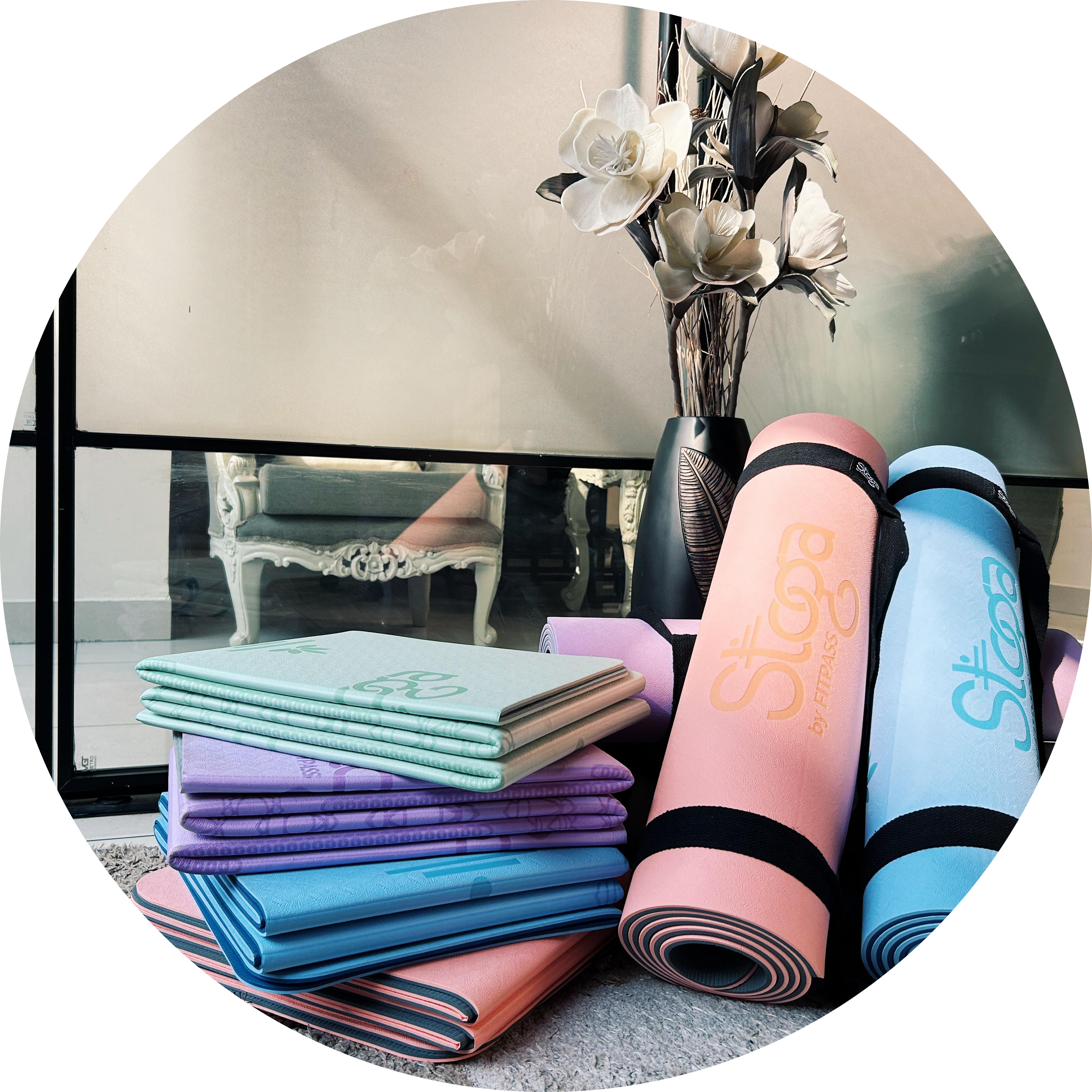
- Foldable design: easily folds into a compact size for storage and portability.
- Non-slip textured surface for stable practice sessions.
- Eco-friendly & non-toxic: TPE instead of PVC, free from harmful chemicals.
- Lightweight & portable with carry strap — ideal for home workouts, yoga studios, travel.
- Designed for yoga, Pilates and workout sessions (versatility).
- Comes in multiple colours (e.g., pink, green, blue, purple) to match your style.
Why This Stands Out for Small Spaces and Travel
Since the mat folds easily and is lightweight, you can stash it under the sofa, in a cupboard, or slide it into your suitcase without bulky rolling. The 6 mm thickness ensures you are not compromising on comfort, while the non-slip surface guards against risky slides or instability. The eco-friendly TPE construction also means you’re choosing a mat attuned to mindful living, fitting both your yoga practice and space-saving lifestyle.
How to Integrate the Foldable Yoga Mat into Your Practice
Now that you’ve seen what to look for and one standout product, let’s explore how to make the most of your space-saving mat in everyday practice.
Setting Up in a Small Space
- Find a quiet corner. A mat that folds means you can clear the area quickly.
- Lay your mat on a firm, flat surface. Given the 6 mm cushioning, you’ll have a stable base.
- Keep accessories close by (block, strap), but keep them minimal. Because you chose a compact mat, you’ll want to keep the overall setup clean and simple.
- After practice, fold the mat and store it upright or in the carry strap, out of sight, out of mind until next time.
Travel / On-the-Go Use
- Pack the mat folded into your luggage or gym bag, no extra weight or bulk.
- At a hotel, studio or outdoor session: roll it out, practise, then fold and stow.
- Because the mat is sweat- and water-resistant (as described), it’s easier to wipe down after travel sessions.
- You maintain your continuity of practice, home or away, without compromise.
Daily Home Workouts & Multi-Purpose Use
- Use the mat for yoga flows, stretches, Pilates, or core workouts. It’s marketed as versatile.
- When you finish, fold it; it doesn’t need a dedicated yoga room.
- The “easy-to-store yoga mat” quality means you’re far more likely to use it regularly, because it won’t feel like another piece of bulky gear.
Care & Maintenance
- Wipe the mat with a damp cloth or mild cleaner; its surface resists sweat and water.
- Store in a cool, dry place; avoid prolonged exposure to direct sunlight.
- Periodically unfold fully to check for creases or material stress, especially if folded for long periods.
- As expert sources note, choosing the right thickness and material helps durability.
Personal Experience / Testimonial
As a senior writer with a home office doubling as a workout space, I recently switched to the Stoga Origami Foldable Yoga Mat, and I want to share what happened.
The Setup: My home lounge is compact—no extra room for a dedicated yoga studio. Previously, I had a standard roll-out mat that I stored leaning against the wall; it looked bulky, and I often flinched at the visual clutter. I was also travelling occasionally and found rolling the mat into luggage was a hassle.
The Switch: With the Stoga Origami mat, I could fold it after use and tuck it neatly under the sofa. I appreciate the 6 mm cushion—when I do kneeling stretches or longer holds in Yin Yoga, it feels supportive. The textured surface gives me confidence in downward-dog transitions; no slip, even when my palms were a little sweaty.
On Travel Days: It came into its own during a weekend away: I folded it, slipped the carry strap on, tucked it into my suitcase, and headed to the hotel yoga session. No fuss, no bulky roll inside the bag.
The Space Benefit: Because the mat doesn’t dominate my room visually or physically, I feel more inclined to roll it out regularly. It’s out of sight when not in use, so I found myself using it more consistently.
Eco/Sustainability Feel: I liked the non-PVC, TPE material specification. It aligns with my personal goal of more mindful consumption.
A Tip for You: If you’re using other furniture or accessories in a dual-purpose room (office + workout), choose a mat you won’t hate storing. My little psychological shift was: I no longer “set up” and “put away” yoga gear; this mat integrated so seamlessly that it felt natural.
The Bigger Picture: Why It’s Worth the Investment
While many yoga mats cost relatively little, investing in a high-quality, foldable, space-saving mat is more than a one-time purchase; it’s about the practicality of use, continuity of practice, and environmental mindfulness.
- Practicality of Use: When your gear is easy to deploy, store and travel with, you’re far more likely to use it. A bulky mat that sits in a corner gets ignored; a compact, fold-away mat becomes part of your routine.
- Continuity of Practice: Whether home or away, the ability to practise without disruption supports habit formation.
- Environmental Mindfulness: Choosing TPE or eco-friendly materials, free from harmful chemicals and PVC, aligns with a more thoughtful yoga practice.
- Space Efficiency: In a flat where every inch counts, being able to fold the mat and store it cleanly matters.
- Versatility: This kind of mat supports yoga, Pilates, stretching and even light floor workouts, so it serves multiple roles in your fitness gear.
In short, the origami, foldable, compact yoga mat is not just a marketing term; it’s a functional upgrade for the modern yogi.
Conclusion
In a world where our living spaces are shrinking, fitness gear must adapt. The origami yoga mat, this foldable, compact, space-saving, travel-ready accessory, is perfectly aligned with that shift. With the right material (dual-layer TPE), thoughtful design (non-slip texture, carry strap), and focus on portability and eco-consciousness, the Stoga Origami Foldable Yoga Mat (and mats like it) stand out as excellent choices.
If you’re a yogi working from home, living in a small space, travelling frequently or simply seeking simplicity and practicality, a mat designed for minimal space and maximal flexibility is a smart buy. Choose well, store smartly, practise consistently, and let your mat support your flow, not clutter your space.
FAQs
Q1. Can a foldable yoga mat really replace a traditional roll-out mat for serious practice?
Yes, provided it has sufficient thickness and grip. The key is material and structure. A high-quality foldable mat with 6 mm thickness and dual-layer TPE (like the Stoga) can offer comfort and stability comparable to thicker roll-out mats, while adding portability.
Q2. Is 6 mm thickness enough cushioning for my joints?
For most home or small-space use, yes. Expert guidance suggests that mats with more cushioning are useful for kneeling or restorative styles. The 6 mm thickness offers a good balance between cushioning and stability. If you have very sensitive knees or practise on concrete, you might consider adding a thin extra layer underneath.
Q3. What makes TPE material beneficial compared to PVC or rubber mats?
TPE is often more eco-friendly, recyclable, and free from some harmful chemicals found in PVC. It offers good traction and is typically lighter. According to REI, TPE mats “may be more environmentally friendly than PVC mats”.The environmental angle and lighter weight make TPE strong for travel and small-space usage.
Q4. How do I care for a foldable yoga mat to keep it in good condition?
Wipe it down after use (especially if you sweat). Store it folded or compacted as designed (ensure no deep creases). Keep it away from extreme heat or direct sunlight for long periods. Occasionally, fully unfold to check for wear. Use mild cleaning solutions and avoid harsh chemicals that can degrade the surface.


