





If you think you need long, exhausting sessions to get fit, it’s time to rethink that belief. A full-body workout under 30 minutes can deliver serious results when done right. Whether your goal is fat loss, strength, or simply staying active on busy days, short and focused workouts can work wonders.
The beauty of a full-body workout lies in its efficiency. Instead of isolating one muscle group per session, you train your entire body in one go. This approach saves time, boosts calorie burn, and improves overall conditioning. From a full body workout at home without equipment to a full body gym workout with dumbbells, there’s a version that fits every lifestyle.
Key Takeaways
- A full-body workout can be completed effectively in under 30 minutes
- Training the whole body increases calorie burn and saves time
- You can do a full-body workout at home, with or without equipment
- Short workouts support fat loss, strength, and consistency
- Suitable for beginners, busy professionals, and experienced trainers
Why a 30-Minute Full Body Workout Actually Works
A common misconception is that short workouts are only “better than nothing.” In reality, a well-designed full-body workout plan can outperform longer, poorly structured sessions.
Short workouts force you to focus. There’s no room for wasted time, endless rest, or unnecessary exercises. When you train multiple muscle groups together, your heart rate stays elevated, turning the session into a full-body fat loss workout as well as a strength builder.
Research supports this approach. A study published in the Journal of Strength and Conditioning Research found that full-body resistance training led to similar muscle gains and greater time efficiency compared to split routines. Another study in Sports Medicine highlighted that shorter, high-effort workouts improve adherence, meaning people are more likely to stick with them long term.
Consistency beats perfection every time. And shorter workouts make consistency realistic.
Who Should Do a Full Body Workout?
The short answer? Almost everyone.
A full-body workout for beginners is ideal because it teaches movement patterns like squats, push-ups, and pulls without overwhelming the body. For busy professionals, a full-body home workout fits neatly into a packed schedule. Even experienced lifters benefit from full-body routines when time is limited or recovery is needed.
Men often ask whether a full-body workout at home for men is enough to build muscle. When intensity, progression, and form are prioritised, the answer is yes. Muscles respond to tension, not fancy equipment.
Structuring a Full Body Workout Under 30 Minutes
To make a short workout effective, structure matters. Random exercises won’t cut it.
A solid full-body workout plan follows this flow:
- Warm-up (3–5 minutes)
- Compound strength movements (15–20 minutes)
- Conditioning or finisher (3–5 minutes)
- Cool-down or mobility (optional if short on time)
Each section flows into the next, ensuring your body stays warm and engaged throughout the session.
Full Body Workout at Home Without Equipment
Let’s start with the most accessible option. A full body workout at home without equipment relies entirely on bodyweight movements. This makes it perfect for beginners, travellers, or anyone training in small spaces.
Sample 25-Minute Bodyweight Workout
Warm-up (5 minutes)
Jumping jacks
Arm circles
Hip openers
Bodyweight squats
Main Circuit (Repeat 3–4 rounds)
Squats – 15 reps
Push-ups – 10–15 reps
Reverse lunges – 10 reps per leg
Plank – 30 seconds
Mountain climbers – 30 seconds
Finishminuteser (3 )
High knees
Squat pulses
Fast feet
This full-body home workout hits your legs, chest, core, and shoulders while keeping your heart rate high. It transitions smoothly from strength to cardio, making it effective for fat loss.
Full Body Workout at Home With Dumbbells
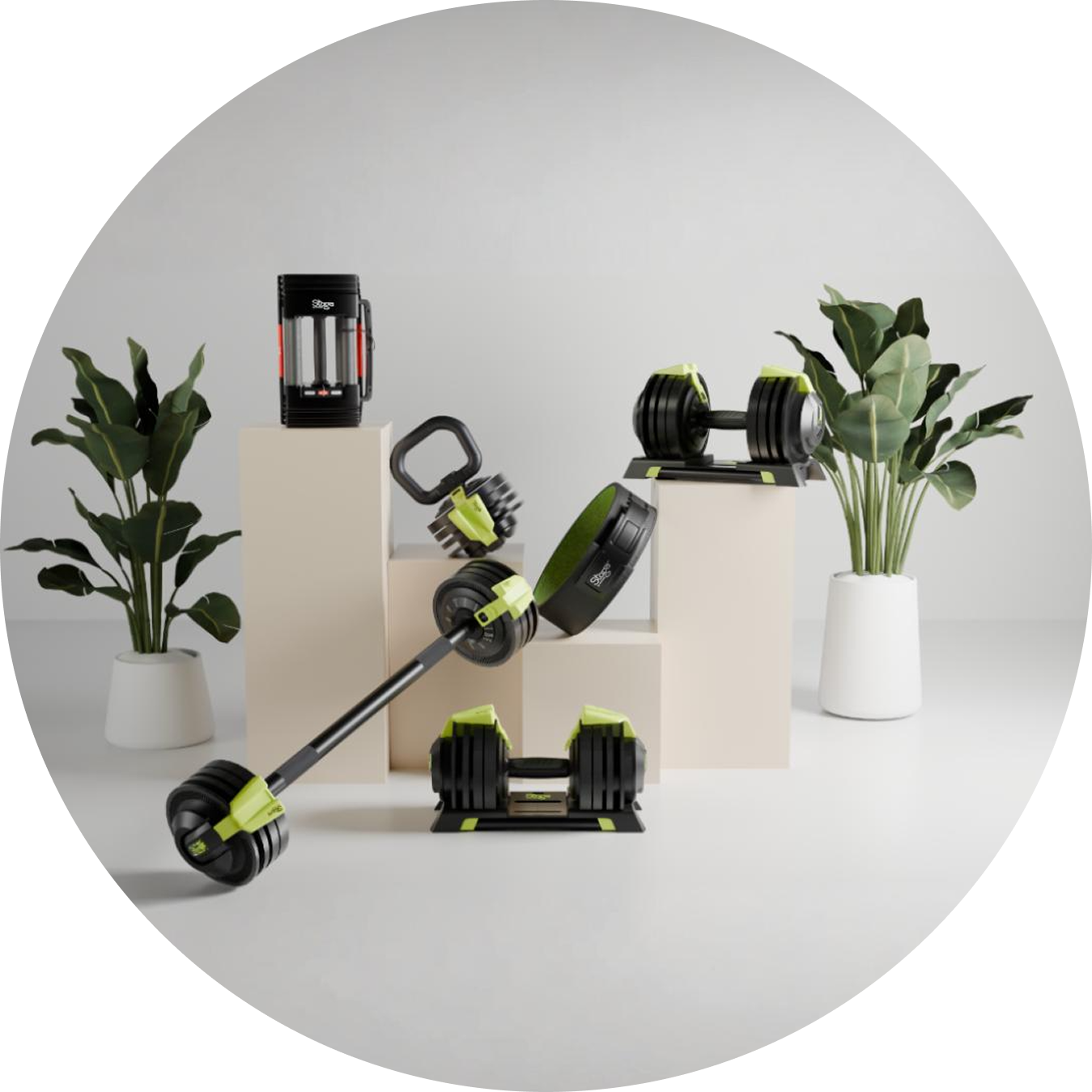
If you have access to weights, a full-body workout with dumbbells allows you to add resistance and progress faster. Dumbbells also help correct muscle imbalances and improve coordination.
30-Minute Full Body Dumbbell Workout
Warm-up (5 minutes)
Bodyweight squats
Arm swings
Light dumbbell deadlifts
Strength Block (3 rounds)
Dumbbell goblet squats – 12 reps
Dumbbell chest press (floor) – 10 reps
Bent-over dumbbell rows – 12 reps
Dumbbell shoulder press – 10 reps
Conditioning Block (5 minutes)
Dumbbell thrusters
Dumbbell swings
Marching in place with weights
This full-body dumbbell workout builds strength while maintaining a metabolic edge, making it suitable for both muscle gain and fat loss.
Full Body Strength Workout vs Fat Loss Workout
While the exercises may look similar, the intent changes everything.
A full-body strength workout focuses on controlled reps, heavier resistance, and longer rest periods. On the other hand, a full-body fat loss workout uses lighter loads, higher reps, and shorter rest to keep the heart rate elevated.
The good news is that a 30-minute session can combine both. Strength movements followed by a conditioning finisher give you the best of both worlds.
Full Body Workout for Beginners: What to Keep in Mind
If you’re new to training, jumping into high-intensity routines can be discouraging. A full-body workout for beginners should prioritise form over speed.
Start with:
- Fewer rounds
- Longer rest periods
- Simple movements
As confidence grows, intensity can be increased gradually. This smooth progression keeps the workout safe and sustainable.
Common Mistakes to Avoid
Even short workouts can fail if done incorrectly.
- Skipping warm-ups
- Poor form due to rushing
- Doing too many exercises
- Ignoring recovery
A well-structured full-body workout plan values quality over quantity.
How Often Should You Do a Full Body Workout?
For most people, 3–4 sessions per week work perfectly. Beginners can start with two sessions and build up gradually. The key is recovery. Since the entire body is involved, rest days matter.
Spacing workouts evenly across the week ensures better performance and long-term results.
Conclusion: Train Smarter, Not Longer
A full-body workout under 30 minutes proves that fitness doesn’t have to be complicated or time-consuming. Whether you prefer a full body workout at home without equipment, a full body dumbbell workout, or a full body gym workout, the principles remain the same.
Focus on compound movements, maintain intensity, and stay consistent. When time is short, but goals are big, full-body training is the smartest way forward.
FAQs
1. Is a full-body workout effective for fat loss?
Yes. A well-planned full-body fat loss workout keeps the heart rate high and burns more calories in less time.
2. Can beginners do full-body workouts?
Absolutely. A full-body workout for beginners helps build strength, coordination, and confidence safely.
3. Is a full-body workout at home without equipment enough?
Yes. Bodyweight exercises can deliver excellent results when performed with proper intensity and form.
4. How long should a full-body workout be?
Anywhere between 20 and 30 minutes is sufficient if the workout is structured and focused.

